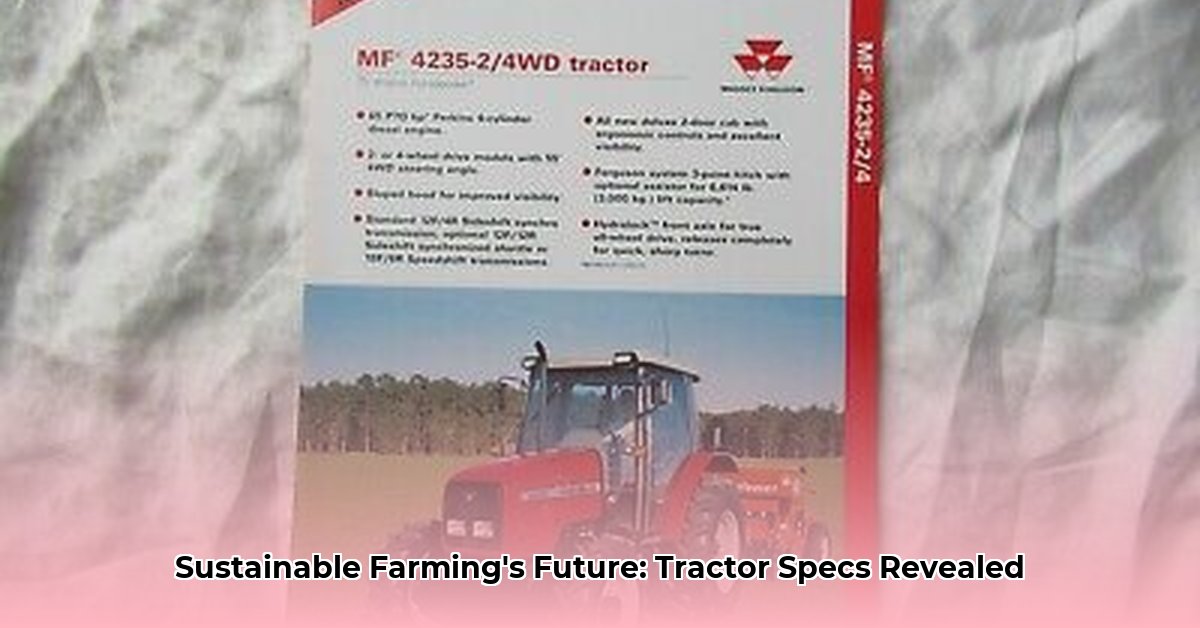
Tractor Specification: Your Guide to Smart Farming in 2025
Choosing the right tractor is a pivotal decision for any farmer. This investment significantly impacts farm efficiency, profitability, and environmental sustainability. This guide clarifies key tractor specifications, simplifying the selection process for informed decision-making. We'll explore crucial features and considerations to help you find the perfect tractor for your operation.
Did you know that choosing the right tractor can increase your farm's efficiency by up to 20%? This guide provides you with the knowledge to make that happen. For even more power, check out high-horsepower tractors.
Engine: The Tractor's Powerhouse
The engine is the heart of any tractor. Key specifications include horsepower (hp) – the engine's power output; torque – its pulling power; and fuel type (usually diesel, but alternatives are emerging). Higher horsepower generally equates to greater power for heavy-duty tasks, but fuel efficiency is equally crucial. Better fuel economy translates to lower operating costs and a smaller carbon footprint. Modern tractors comply with emission standards (reducing harmful exhaust gases), reflecting the growing importance of environmentally responsible agriculture. What's your typical workload? This will help determine the optimal balance between horsepower and fuel efficiency.
Transmission: Optimizing Power Delivery
The transmission system transfers power from the engine to the wheels. Common types include manual transmissions (requiring manual gear changes), automatic transmissions (shifting gears automatically), and continuously variable transmissions (CVTs), offering seamless speed changes. The number of gears affects performance; more gears usually provide finer control, beneficial for variable terrain and tasks. Do you frequently work in diverse conditions? A CVT or transmission with many gears allows for greater control and efficiency. A simpler transmission might suffice if you mainly perform consistent tasks in level fields. Selecting the right transmission ensures optimal power delivery and efficient operation.
Hydraulics: Powering Farm Implements
The hydraulic system powers implements, such as loaders and three-point hitches. Key metrics include flow rate (hydraulic fluid volume) and pressure (force exerted). Higher flow rates and pressures enable lifting and operating heavier equipment, improving overall farm productivity. What's the heaviest equipment you'll routinely use? This determines the necessary hydraulic system capacity to ensure sufficient lifting capacity and smooth operation.
Size and Dimensions: Maneuverability and Footprint
Tractor dimensions (length, width, height, ground clearance) directly influence maneuverability and field access. Smaller tractors excel in confined spaces, while sufficient ground clearance prevents crop damage or hitting obstacles. What's the layout of your farm and fields? Choosing a tractor that fits your workspace efficiently and safely is just as crucial as its technical specifications.
PTO and Three-Point Hitch: Connecting Implements
The power take-off (PTO) shaft transmits engine power to external tools like mowers and balers. Specifications include PTO horsepower and speed options. The three-point hitch connects implements to the rear of the tractor. Its category and lift capacity dictate compatible equipment. Choosing the right PTO and three-point hitch ensures operational flexibility and compatibility with existing and future equipment.
Tires: Traction, Compaction, and Sustainability
Tire size and tread patterns heavily influence traction and soil compaction. Wider tires improve traction but may increase compaction, harming soil health. Deeper treads offer better grip but can also increase compaction. Shallower treads may reduce compaction but sometimes compromise traction. This trade-off highlights the importance of balancing traction needs with soil health considerations. What soil types do you work with? This will influence your choice of tire size and tread patterns.
Cab and Controls: Operator Comfort and Safety
Operator comfort and safety are paramount. Features like air conditioning, suspension, and ergonomic controls maximize efficiency and reduce fatigue. Excellent visibility is crucial for safety. How many hours will you spend operating the tractor each week? Prioritizing operator well-being directly impacts productivity and farm efficiency.
Sustainability Features: Environmentally-Friendly Farming
Many manufacturers are incorporating sustainability features. Look for tractors with improved fuel efficiency, reduced emissions, and minimized soil compaction features. These features include specialized engine technologies, intelligent power management systems, or advanced hydraulics.
Comparative Analysis: Making Informed Decisions
Direct comparison of models from different manufacturers is vital. A detailed comparison chart highlighting key differences is essential for informed decision-making. Consider horsepower, fuel efficiency, hydraulic capacity, dimensions, and price to find the optimal balance between capabilities and affordability.
| Feature | Model X | Model Y | Model Z |
|---|---|---|---|
| Horsepower | 120 hp | 150 hp | 180 hp |
| Transmission | Automatic | CVT | Manual |
| Fuel Efficiency (L/hr) | 12 L/hr | 15 L/hr | 18 L/hr |
| Hydraulic Flow Rate | 80 L/min | 100 L/min | 120 L/min |
| Price | $80,000 | $95,000 | $110,000 |
Conclusion: Choosing the Right Tractor for Sustainable Success
Selecting the right tractor involves careful assessment of your farm's specific needs, budget, long-term costs, and environmental impact. Thorough research and comparison of different models based on your unique conditions are crucial for making a smart investment that supports your farm's long-term success. Remember, the right tractor isn't just a machine; it's a key component in building a prosperous and sustainable future for your farm.